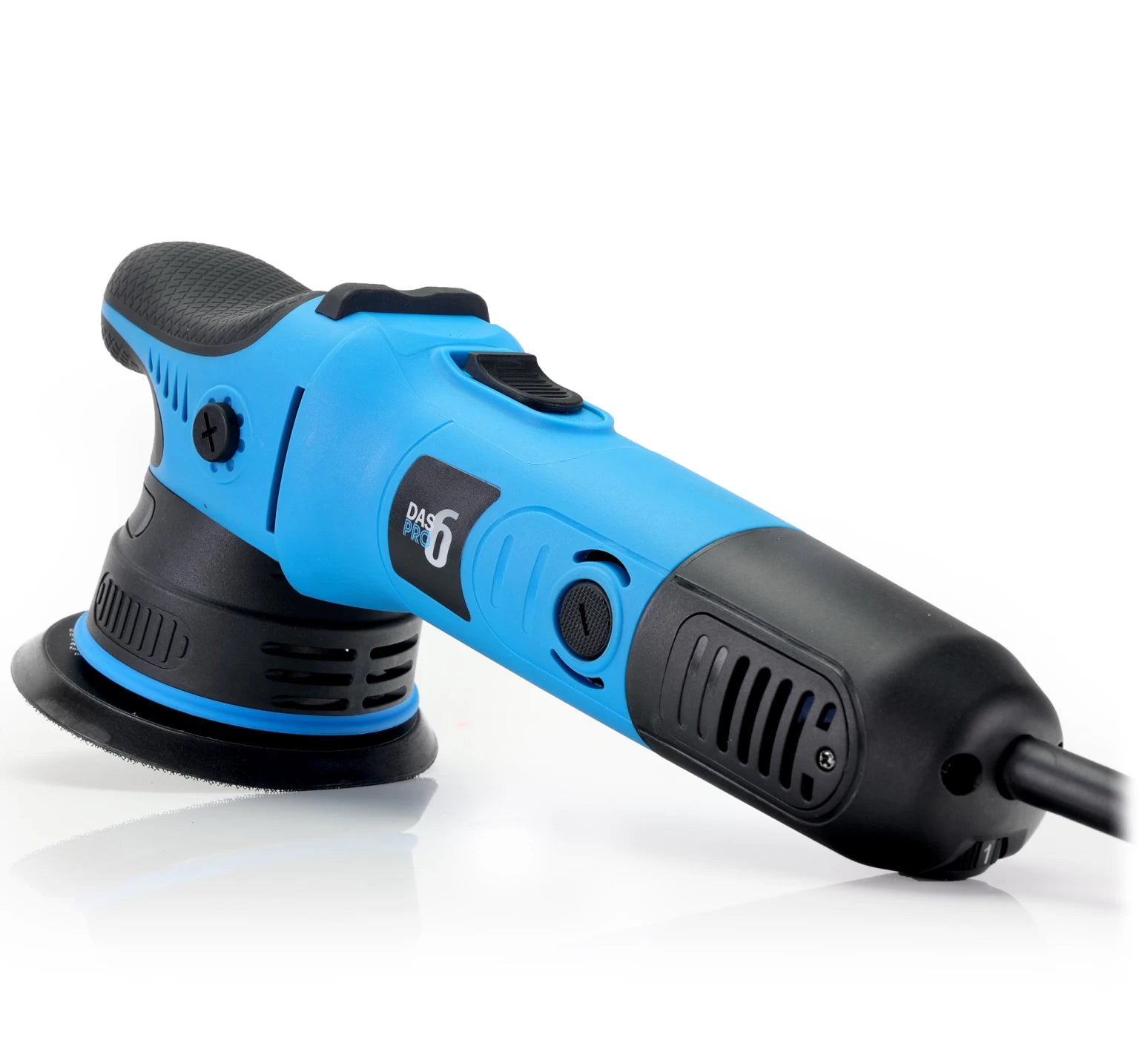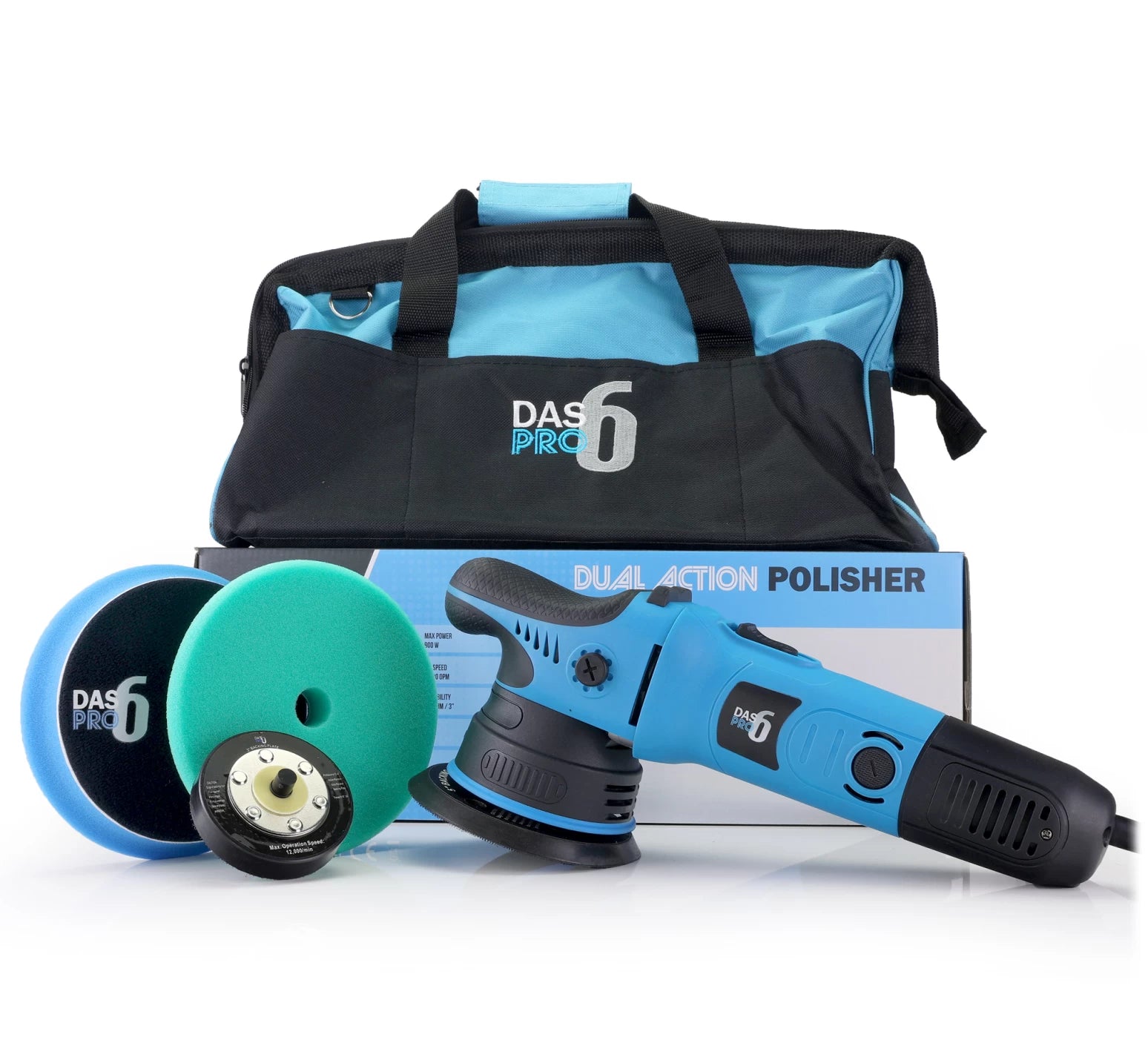
The worthwhile step up if you want more correction headroom without losing the familiar control of a short-throw DA.
There is a point where a basic dual action polisher is still doing the job, but you find yourself wanting a little more authority when the paint is harder or the defects are more stubborn. That's where the DAS-6 PRO V2 makes sense. It stays with a manageable 9mm free-spinning orbit but pairs it with a 900W motor.
That doesn't mean every panel suddenly becomes a one-pass correction. Pad choice, polish, paint hardness and technique still dictate the result. What the PRO gives you is more power in reserve, which is especially welcome when a standard machine starts to feel laboured in demanding work.
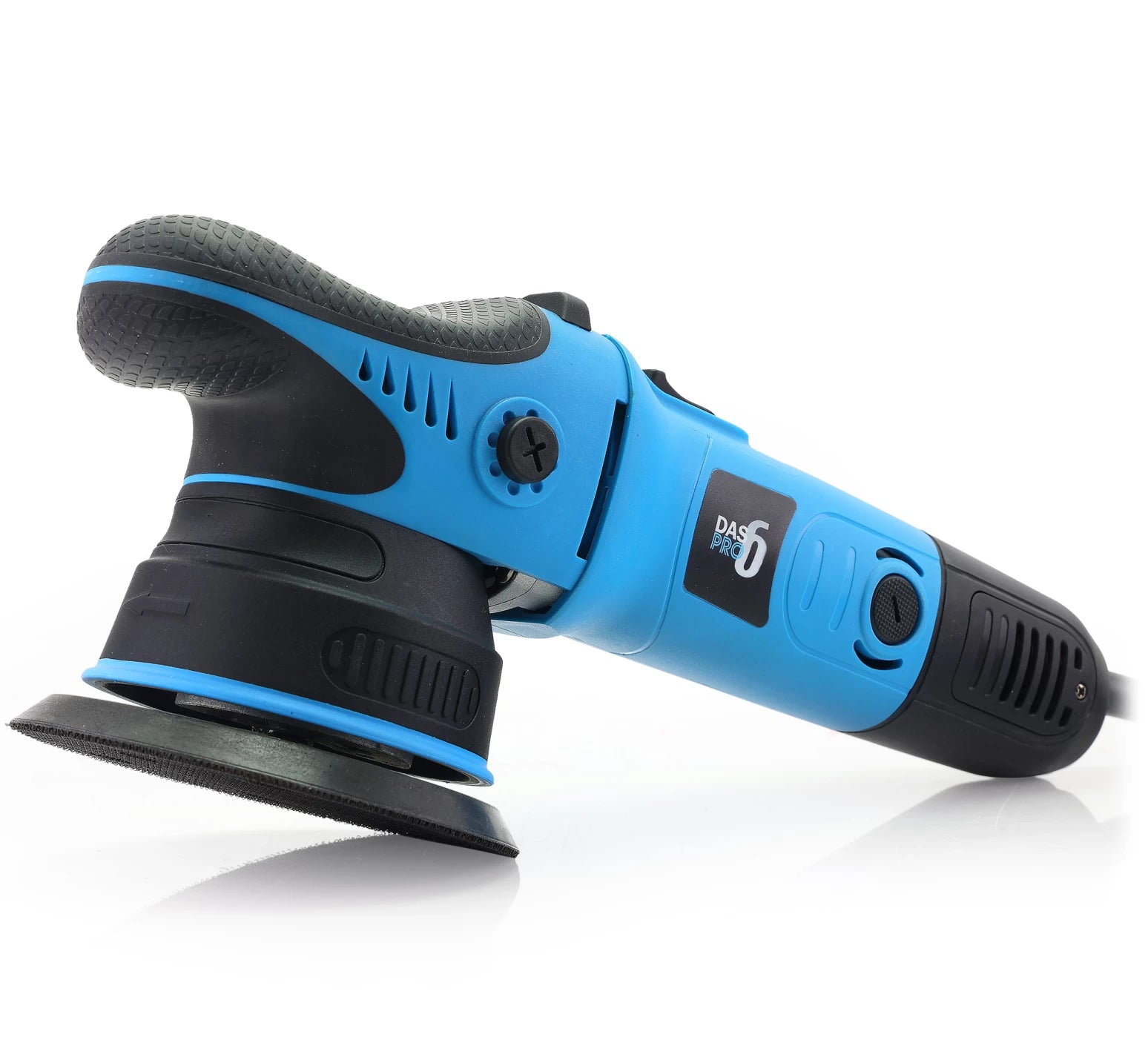
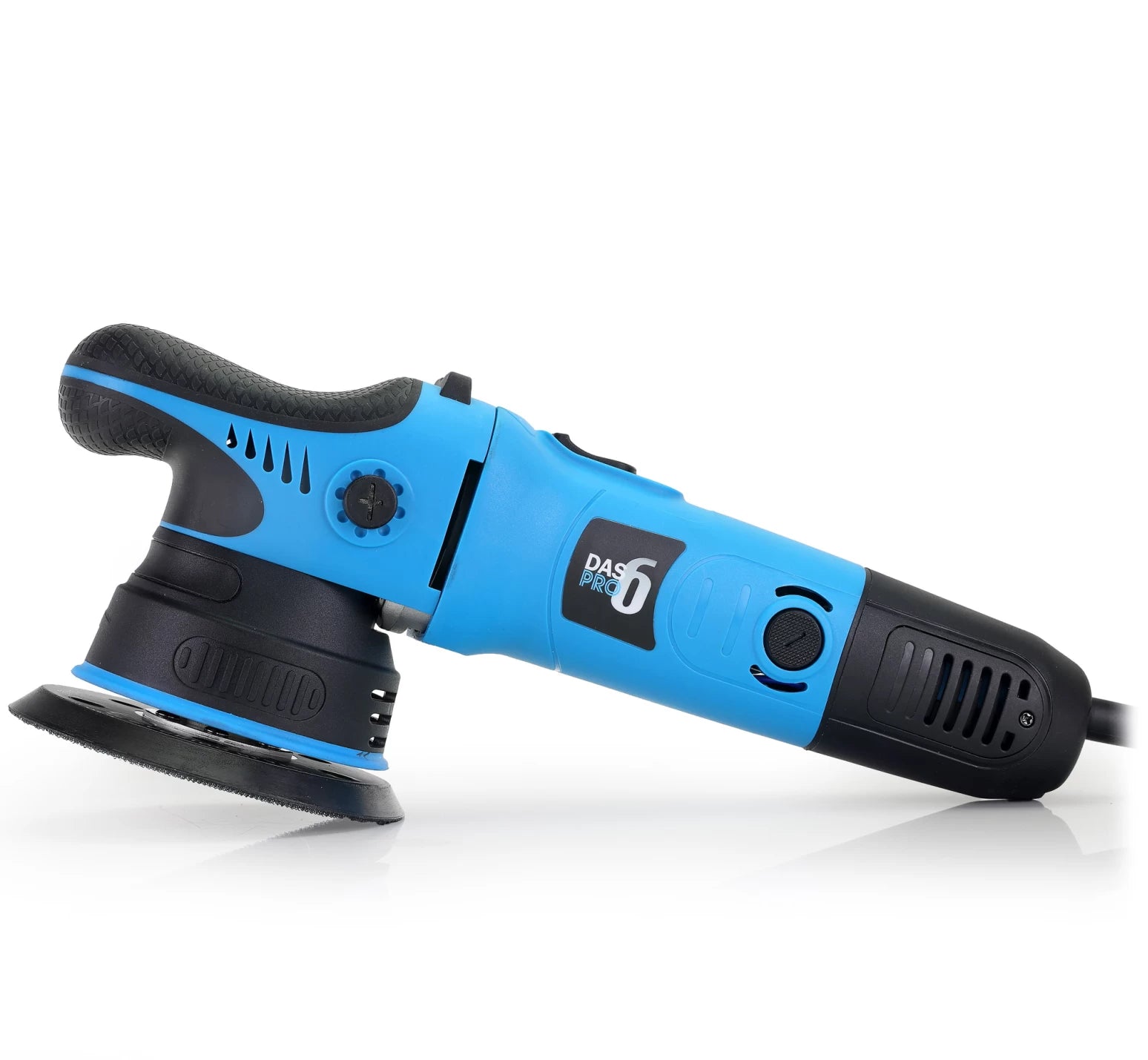
The upgrade isn't just a motor figure. The rubberised front grip makes the machine easier to hold in different positions, the internal gearing and bearings have been revised, and the accessible brush arrangement is a thoughtful consideration for longer-term ownership. These are details that matter if you polish more than once or twice a year.
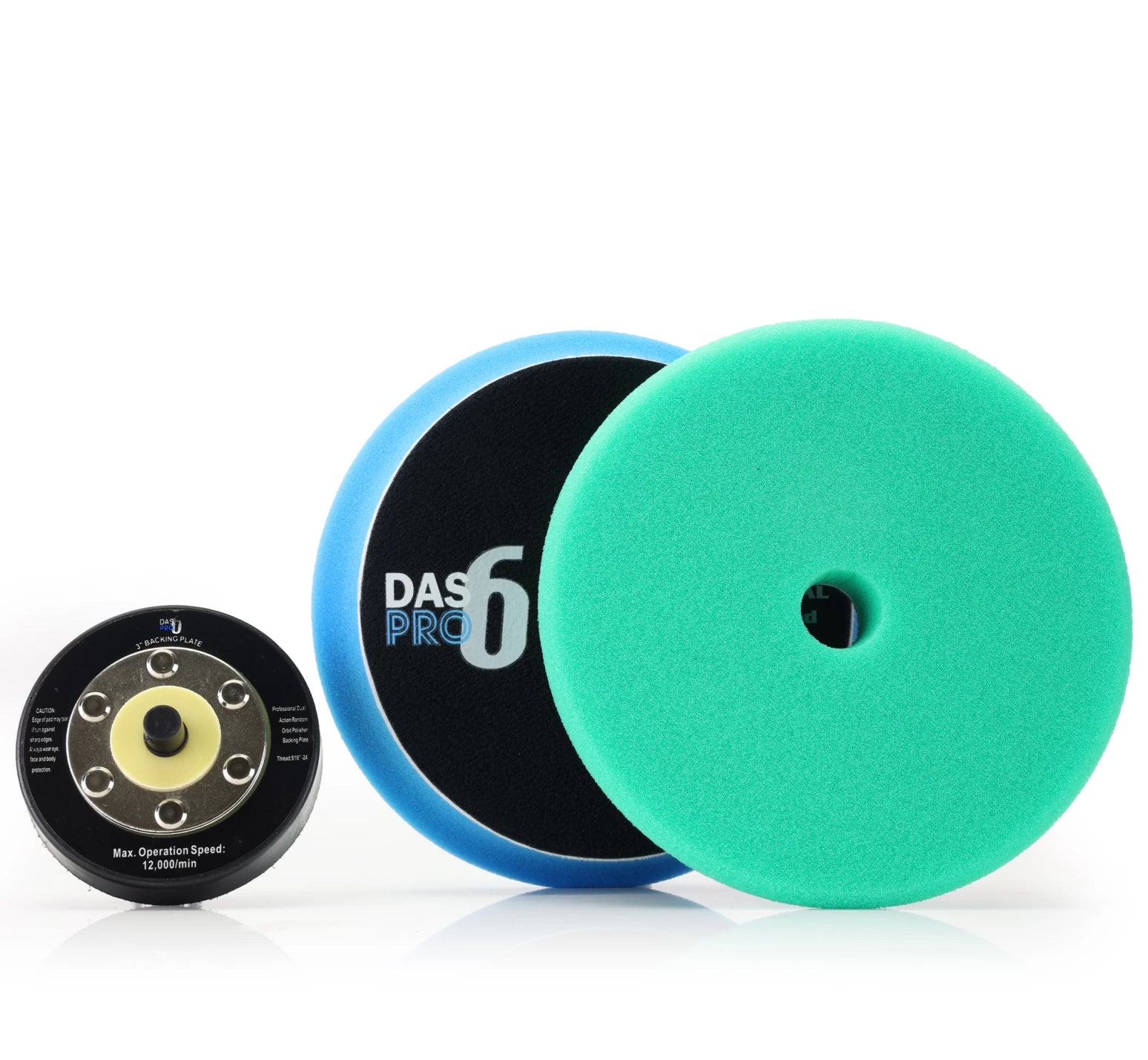
We also think the supplied 75mm backing plate is an important distinction from the standard V2. A smaller pad gives you a more sensible tool for narrower sections and tighter panels, without needing to buy a second machine immediately. It's still a full-size polisher, of course, so very tight areas are better handled by a mini machine.
If you're only looking to bring some gloss back to your own car occasionally, the standard DAS-6 V2 remains good value. If you're planning more regular correction, want the option of smaller pads and appreciate a stronger motor, the PRO is the more convincing long-term purchase.
The DAS-6 PRO V2 is a more capable short-throw dual action polisher designed for paint enhancement and corrective polishing. Its 900W motor and revised ergonomics give experienced enthusiasts a useful step up while retaining the forgiving feel of a free-spinning DA.
A rubberised front grip, six-speed adjustment and supplied 75mm and 125mm backing plates make it adaptable for a range of panels. The 75mm plate is particularly useful where a full-size pad would be awkward.
Why you'll love it:
✓ 900W motor with additional low-speed power compared with the standard V2
✓ 9mm free-spinning orbit
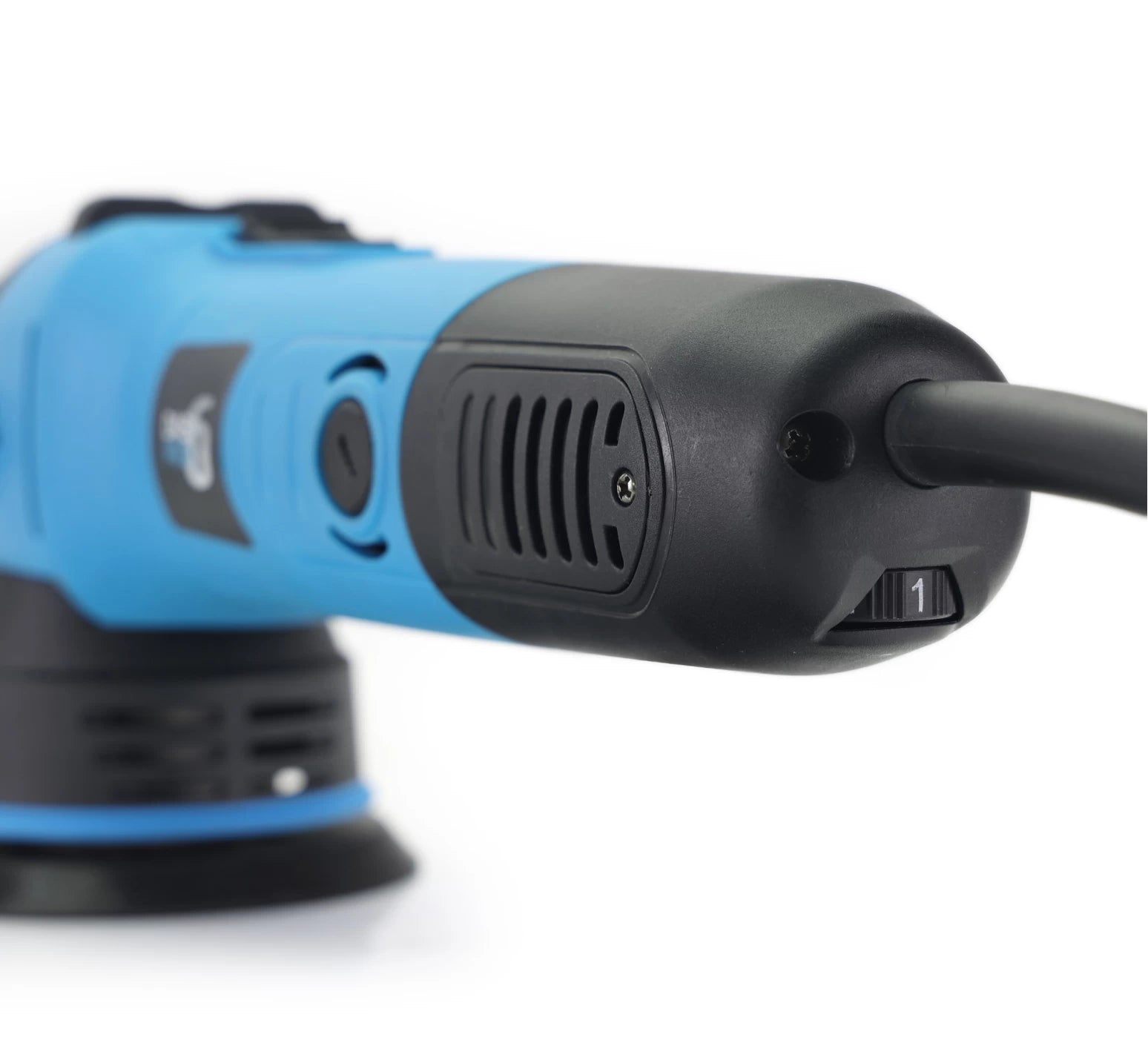
✓ Six-position variable speed control
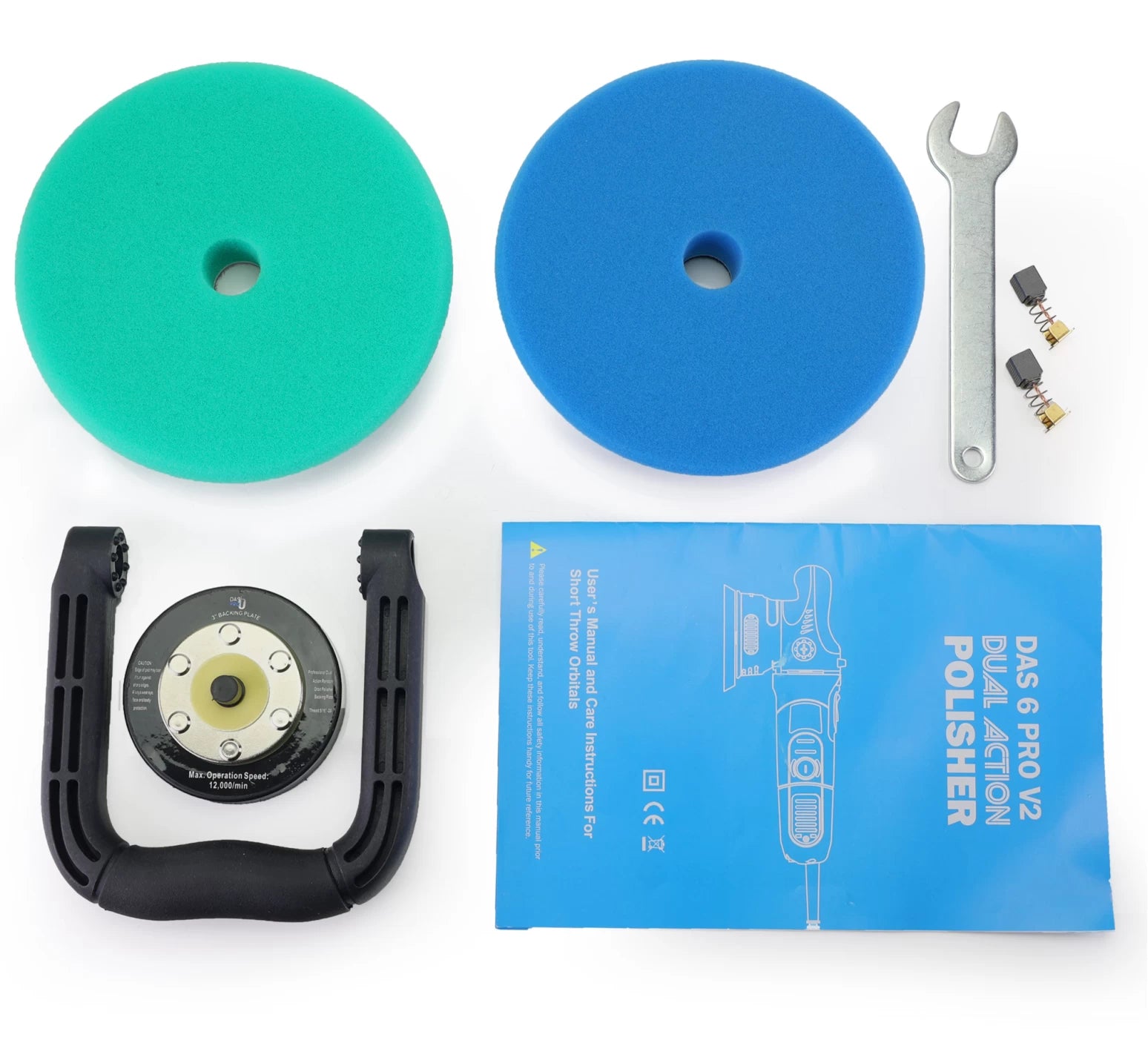
✓ 75mm and 125mm backing plates supplied
✓ Rubberised front grip and counterweight shield
✓ Revised bearings and gearing
✓ Externally accessible motor brushes
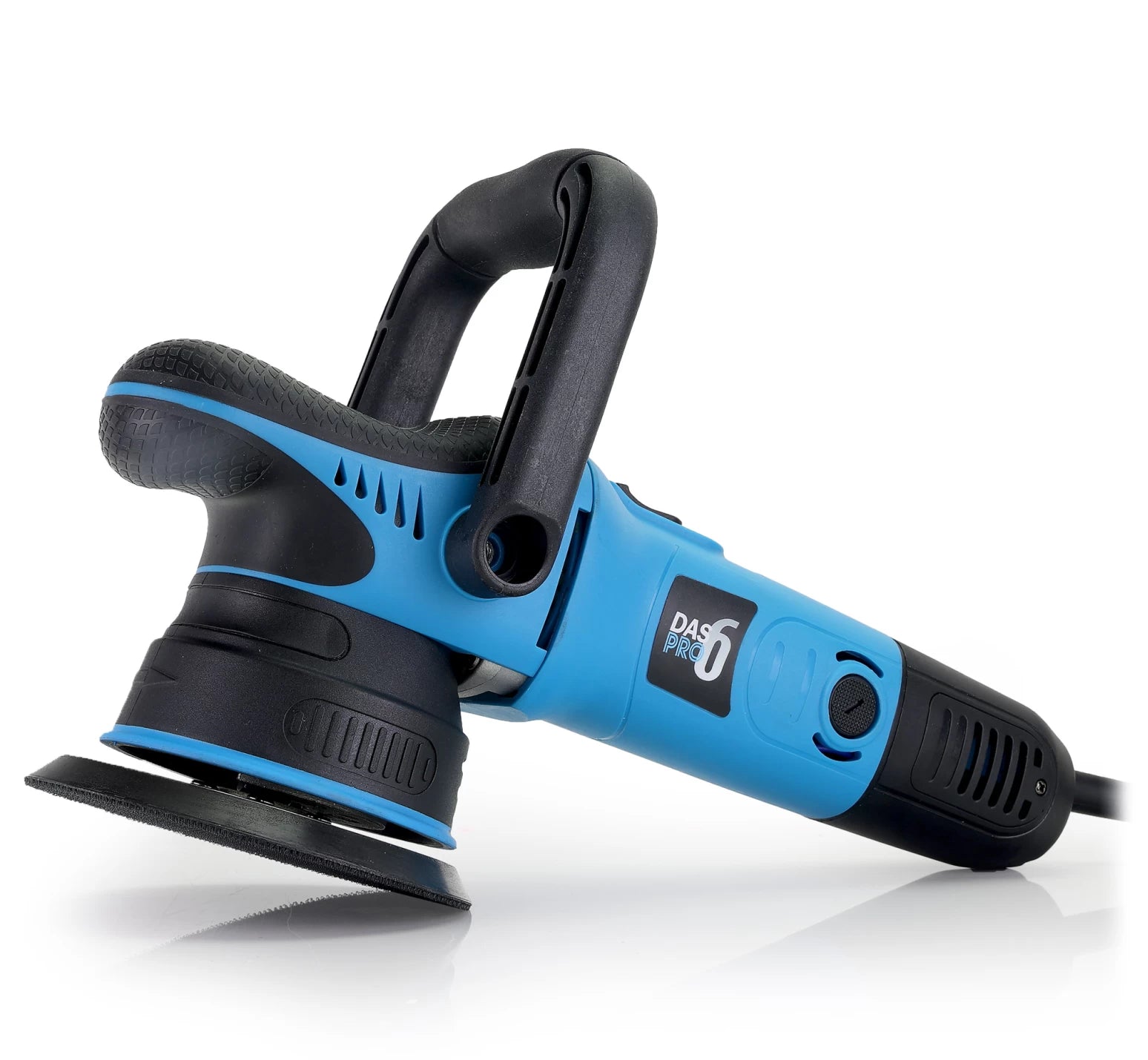
✓ 6m power cable, D-handle and canvas carry case
| Machine Type | Free-spinning dual action polisher |
|---|---|
| Motor Rating | 900W |
| Orbit / Throw | 9mm |
| Speed Control | Six-position variable dial |
| Published Speed Range | 2,500–6,500 (manufacturer listing) |
| Backing Plates Supplied | 75mm and 125mm |
| Backing Plate Thread | 5/16 inch |
| Power Cable | 6m |
| Approximate Weight | 2.3kg |
| Power Supply | Verify plug/voltage of selected variant |
1) Assess the job:
Clean and decontaminate the paint. Check for existing damage and select a test area that represents the defects you're trying to improve.
2) Match the pad to the panel:
Use the 125mm plate for larger accessible sections or the supplied 75mm plate for narrower areas, always with a properly sized compatible pad.
3) Test before increasing cut:
Start with the least aggressive combination likely to work. Evaluate the result before changing polish, pad or machine speed.
4) Maintain a steady technique:
Spread the polish first, then use overlapping passes with the pad kept flat. Avoid concentrated pressure and monitor heat.
5) Review the finish:
Remove polish residue and inspect in good lighting. Follow with a refining step where needed and finish with an appropriate protection product.
Before use: Read the supplied operating instructions, use suitable eye protection, keep loose clothing clear of moving parts and avoid excessive pressure on edges. Disconnect power before fitting accessories.